
When you hear the name Velociraptor, you probably picture a pack of scaly, human‑sized predators hunting in coordinated packs, as famously depicted in Jurassic Park. But the real Velociraptor was something quite different: a feathered, turkey‑sized dinosaur that was nonetheless a highly intelligent and deadly predator of the Late Cretaceous.
In this guide, we’ll separate fact from fiction, exploring the true size, anatomy, behavior, and evolutionary significance of Velociraptor mongoliensis – one of the most misunderstood dinosaurs of all time.
📚 In this article:
- What is Velociraptor?
- Physical Characteristics: Size and Anatomy
- Feathers and Appearance: The True Velociraptor
- Growth and Variation
- Habitat and Lifestyle: Where Did It Live?
- Diet: The Sickle‑Clawed Predator
- The Function of the Sickle Claw and Intelligence
- Predators and Defense
- Pack Hunting: Myth or Reality?
- Discovery and Naming
- Velociraptor Gallery
1. What is Velociraptor?
Velociraptor mongoliensis is a genus of dromaeosaurid theropod dinosaur that lived during the Late Cretaceous period, about 75 to 71 million years ago. Its name means “swift thief” (from Latin velox “swift” and raptor “robber”), a reference to its presumed agility and carnivorous habits.
Velociraptor was a member of the family Dromaeosauridae, commonly known as “raptors.” These dinosaurs were small‑to‑medium‑sized predators characterized by a large, sickle‑shaped claw on the second toe of each foot, used for slashing and holding prey. Despite its fame, Velociraptor was one of the smaller dromaeosaurs, measuring only about 2 meters (6.5 feet) in length and weighing roughly 15 kilograms (33 pounds).
2. Physical Characteristics: Size and Anatomy
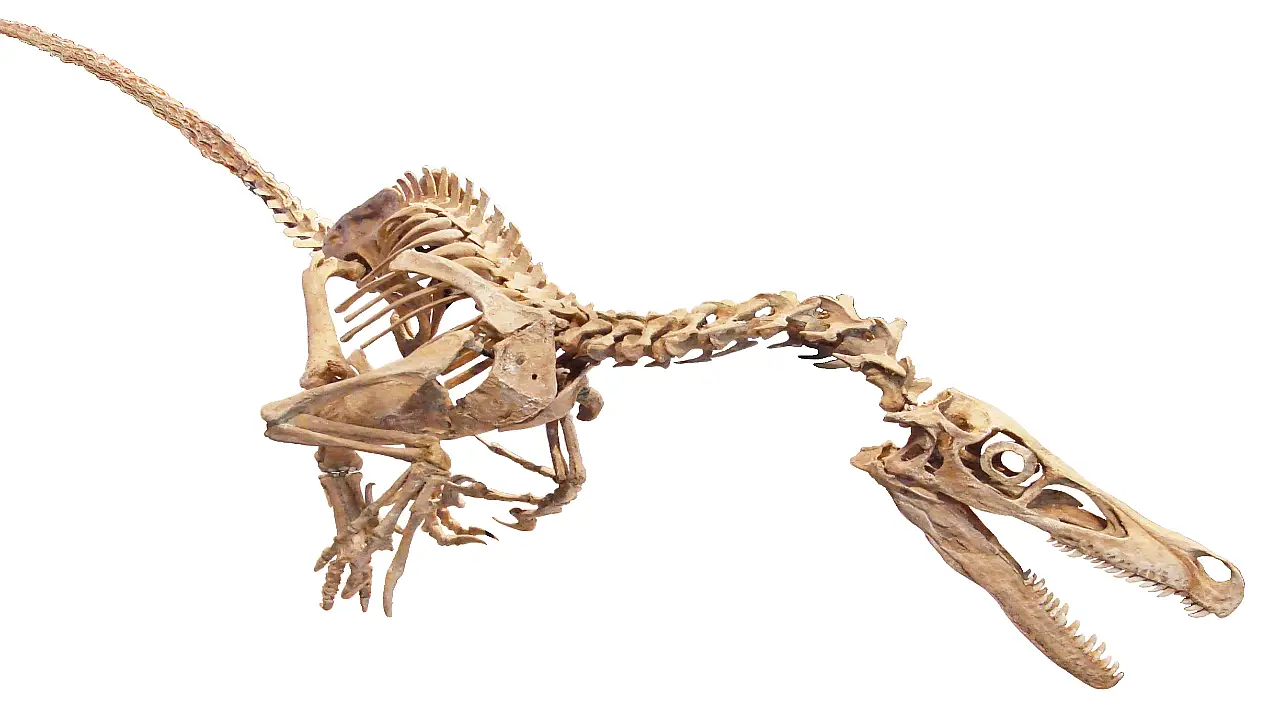
Velociraptor was a lightly built, bipedal predator. Here are its key measurements:
- Length: Approximately 2 meters (6.5 feet) from snout to tail tip.
- Height: About 0.5 meters (1.6 feet) at the hips.
- Weight: Estimated at 15 kilograms (33 pounds), roughly the size of a turkey.
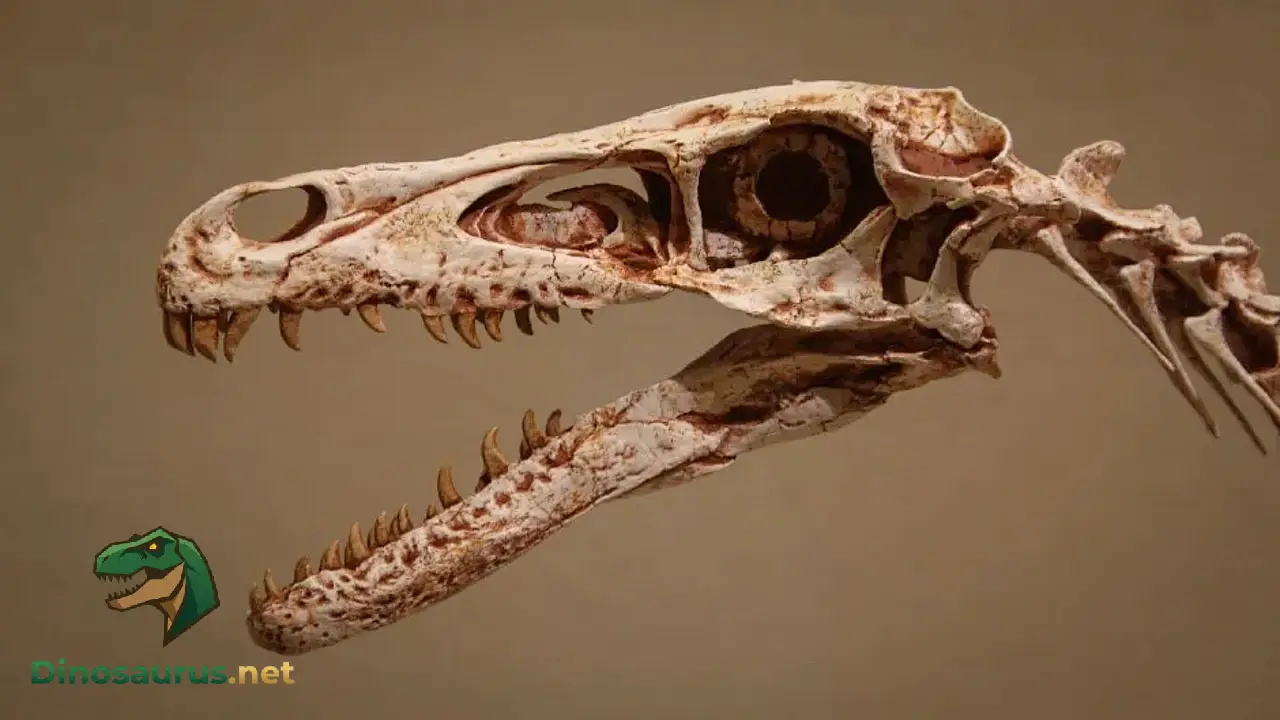
- Skull: Long and low, with up to 80 sharp, serrated teeth.
- Arms: Long, three‑fingered hands with a semilunate (half‑moon) wrist bone that allowed it to fold its arms like birds, useful for gripping.
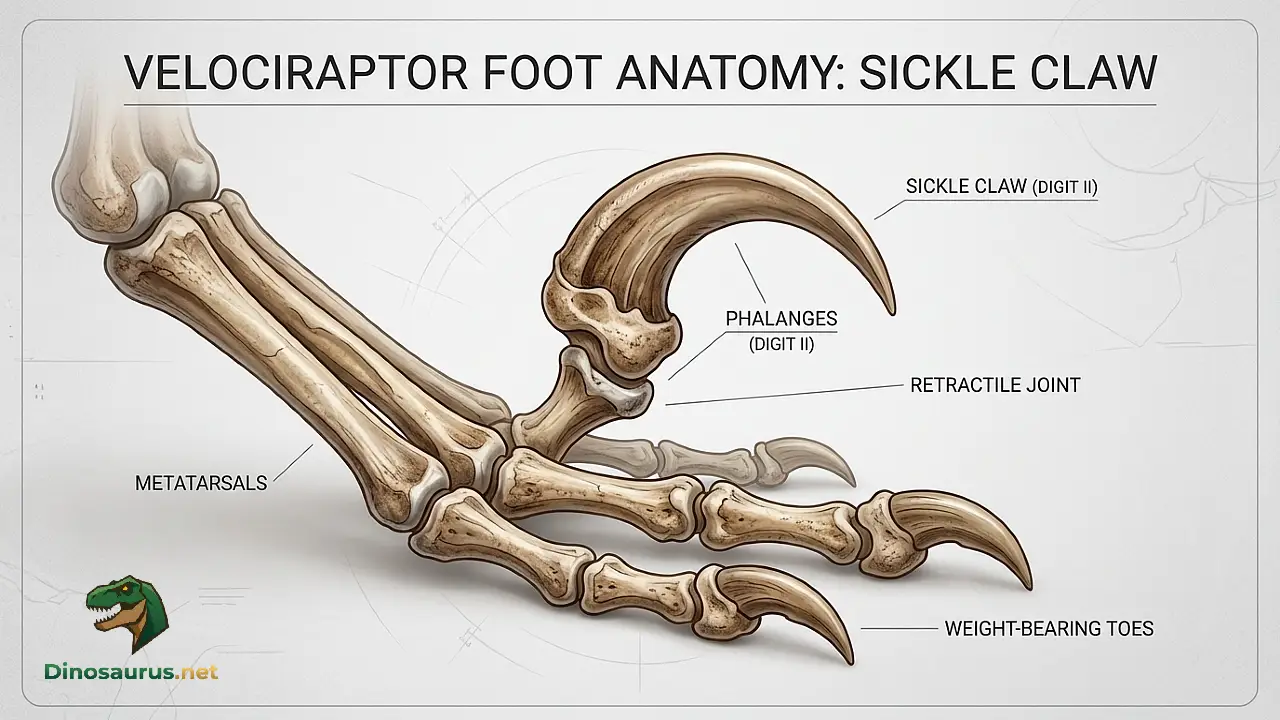
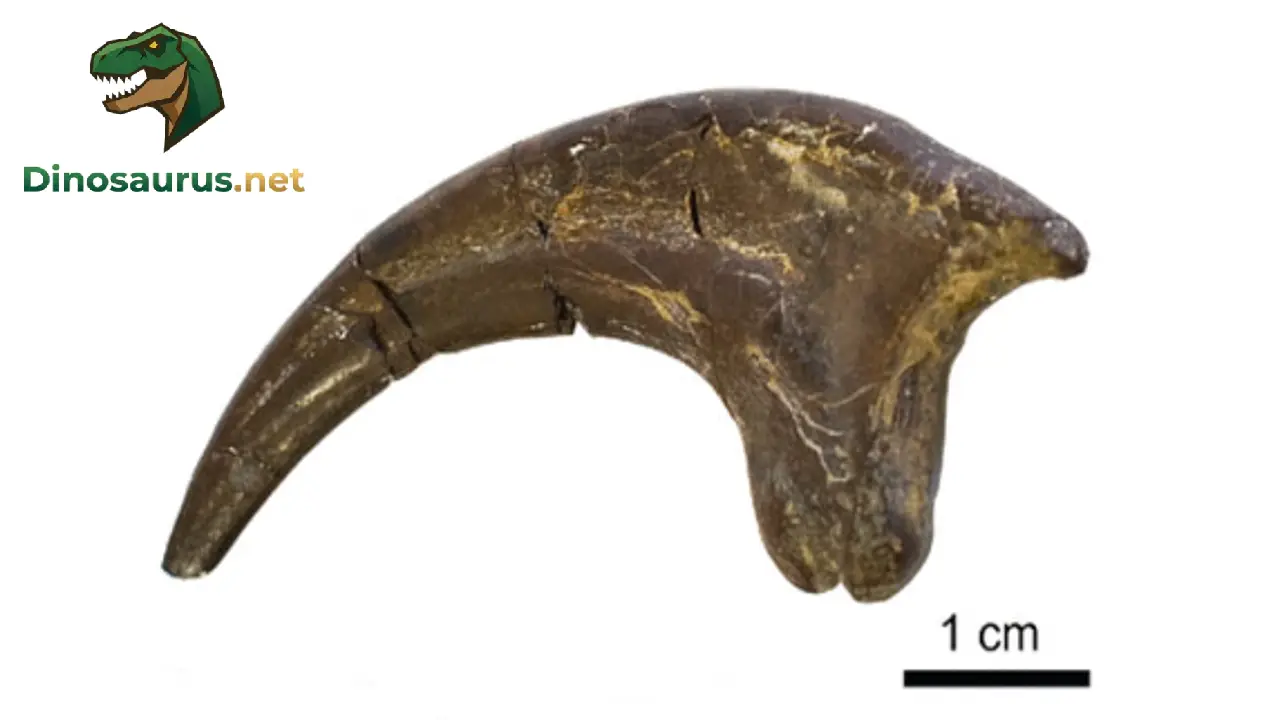
- Sickle claw: On the second toe of each foot, a curved claw up to 6.5 cm (2.5 inches) long that could be raised off the ground to prevent dulling.
Its long tail was stiffened by bony rods (chevrons) that provided balance during running and turning – a crucial adaptation for a pursuit predator. The skull was lightly built but packed with teeth, suggesting it fed on small prey like lizards, mammals, and possibly young dinosaurs.
3. Feathers and Appearance: The True Velociraptor
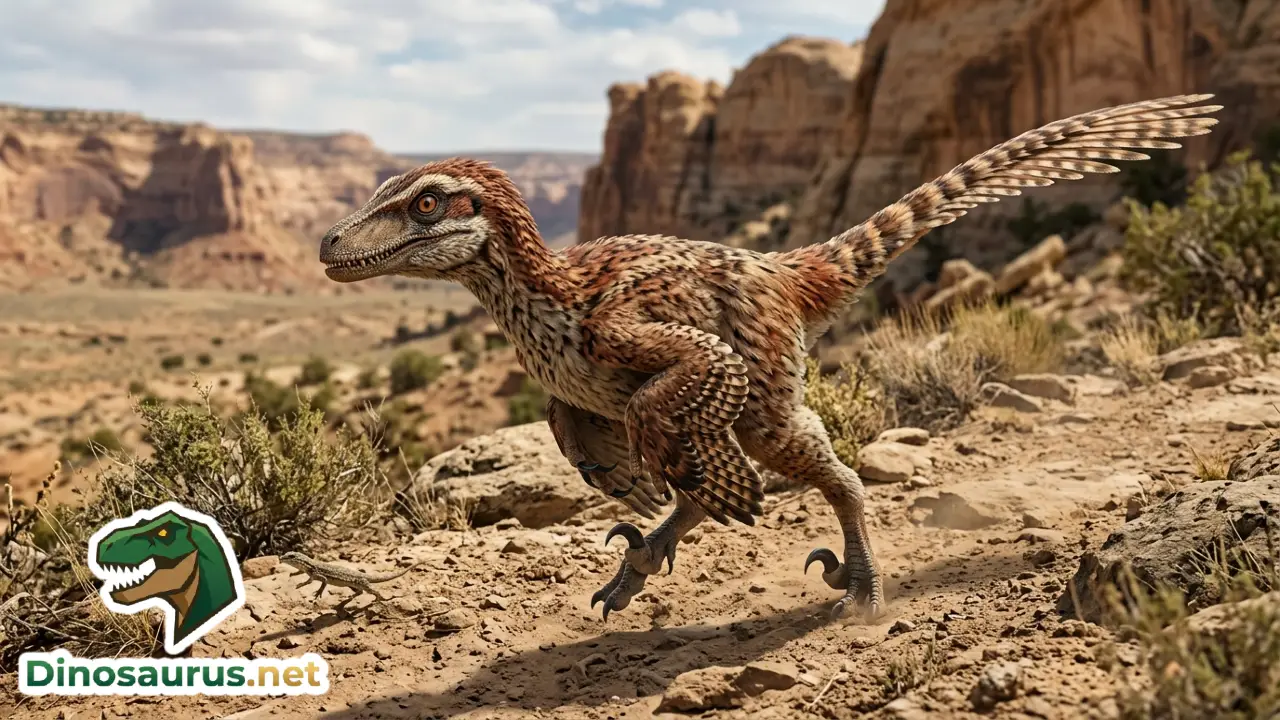
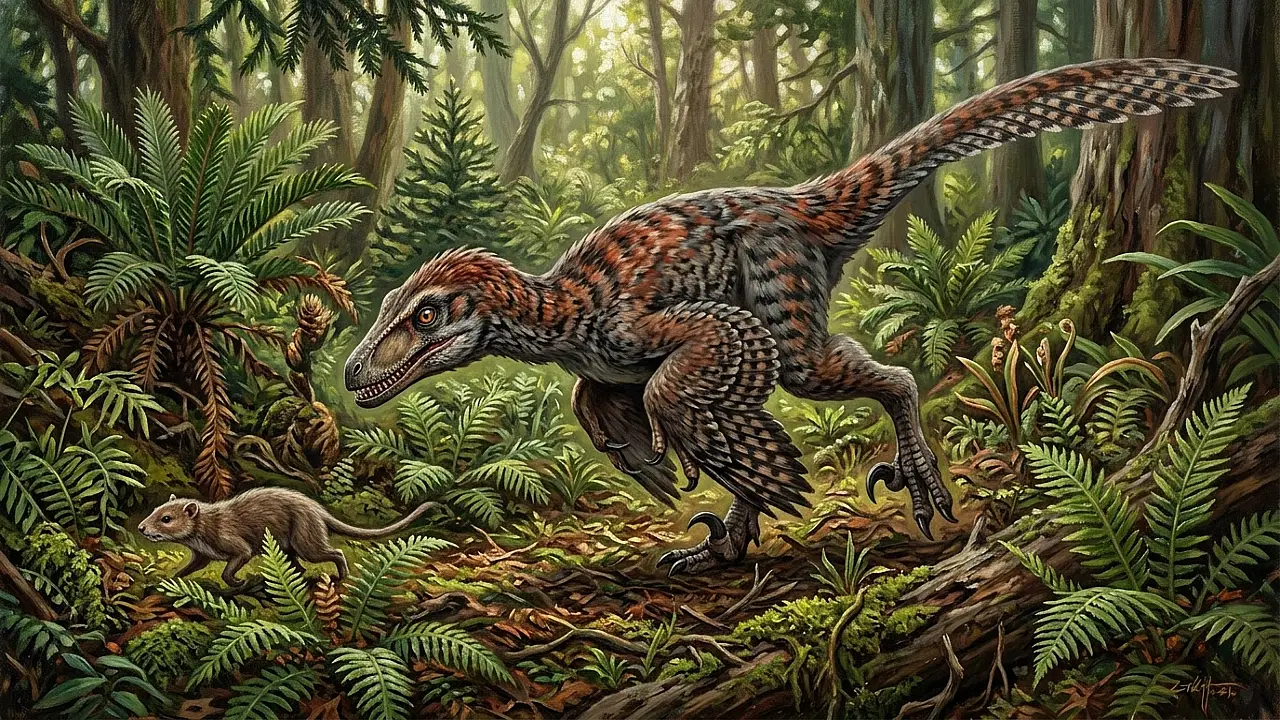
Perhaps the most dramatic correction to the popular image of Velociraptor is that it was feathered. Fossil evidence from close relatives (Microraptor, Zhenyuanlong) and the presence of quill knobs on the forelimb bones of Velociraptor itself indicate that it had feathers.
These were not for flight, but likely for insulation, display, and possibly helping to cover eggs during brooding. The feathers would have given Velociraptor a bird‑like silhouette, with a plumage that may have been patterned in earthy tones or even iridescent, much like modern birds.
In life, Velociraptor probably looked more like a long‑tailed, flightless hawk than the scaly monster of movies. Its face may have had a keratinous beak at the tip of the snout, and its eyes were large, suggesting excellent vision – especially for hunting at dawn or dusk.
4. Growth and Variation
Growth series of Velociraptor are incomplete, but studies of bone histology suggest that dromaeosaurids grew quickly, reaching adult size in a few years. Juveniles would have had proportionally longer legs and more slender builds, perhaps chasing different prey than adults. So far, only one species of Velociraptor is widely accepted: V. mongoliensis, though other species have been named (e.g., V. osmolskae) and are still debated.
5. Habitat and Lifestyle: Where Did It Live?
Velociraptor lived in what is now the Gobi Desert of Mongolia and Inner Mongolia, China. During the Late Cretaceous, this region was not a sandy desert but a semi‑arid landscape with sand dunes, oases, and streams. It was part of a larger landmass known as the Nemegt Basin, which supported a diverse ecosystem of dinosaurs, including Protoceratops, Oviraptor, and the giant theropod Tarbosaurus (a relative of T. rex).
Velociraptor likely inhabited areas near water, where prey was abundant. It may have been a solitary hunter or a social animal (see Section 8). Its small size compared to other predators meant it had to be quick and opportunistic.
6. Diet: The Sickle‑Clawed Predator
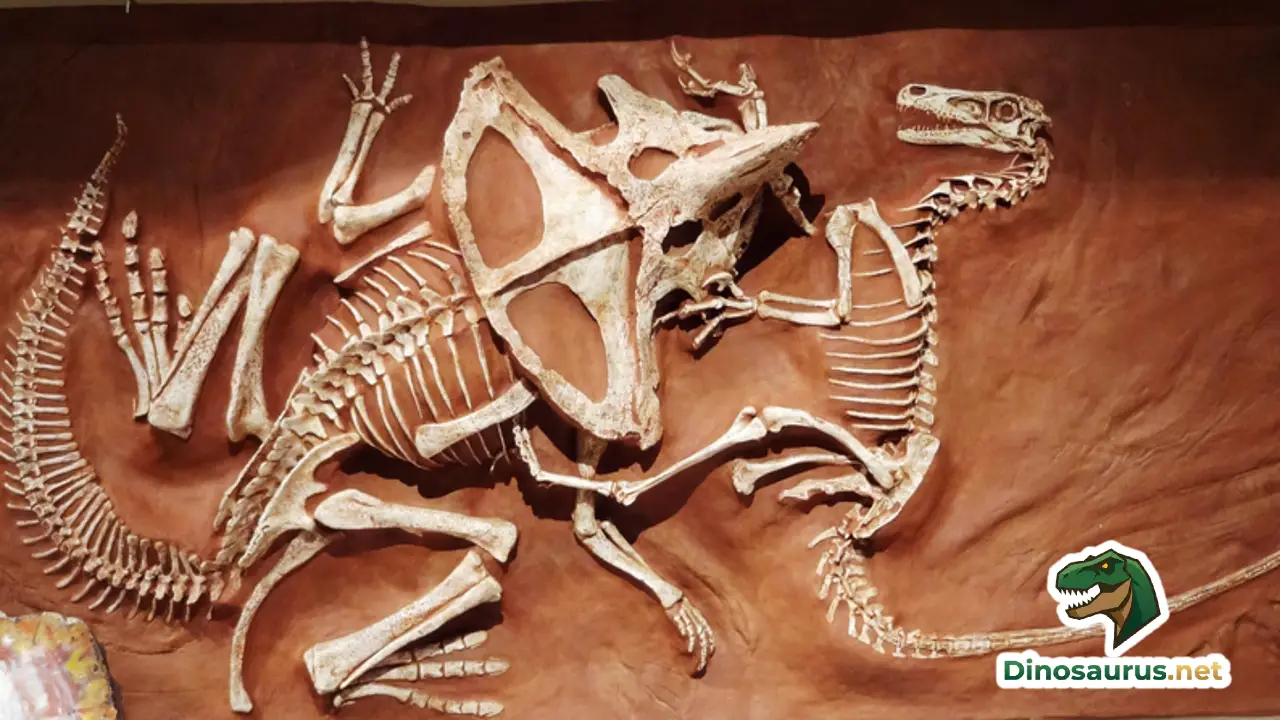
Velociraptor was a carnivore, and its diet consisted of small to medium‑sized animals. The most famous piece of evidence is the “Fighting Dinosaurs” fossil (see Section 9), which shows a Velociraptor locked in combat with a Protoceratops. This suggests that Velociraptor preyed upon ceratopsians, using its sickle claw to slash vulnerable areas.
Other potential prey included lizards, early mammals, and perhaps juvenile hadrosaurs or sauropods. Its teeth were small and serrated, adapted for slicing through flesh rather than crushing bone. It likely used its claws to grapple and hold prey while delivering repeated bites.
🦴 Discover the dinosaur that fought Velociraptor to the death
Learn about Protoceratops →7. The Function of the Sickle Claw and Intelligence
The sickle claw is the most iconic feature of Velociraptor. Researchers propose that it was used to slash at prey, causing deep wounds and blood loss. The claw could be raised off the ground while walking, preserving its sharpness, then brought down in a swift kicking motion to pin or disembowel.
Studies of brain endocasts (CT scans of skull cavities) show that Velociraptor had a relatively large brain for its size, with well‑developed olfactory lobes (smell) and optic lobes (vision). It may have been one of the more intelligent dinosaurs, but claims of “high intelligence” are often exaggerated. It likely had complex behaviors such as parental care and perhaps coordinated hunting.
8. Predators and Defense
Velociraptor faced threats from larger predators, especially Tarbosaurus – a giant tyrannosaurid that shared its ecosystem. To survive, Velociraptor relied on speed, agility, and perhaps camouflage. Its feathers would have helped with concealment and possibly threat display.
Defense against larger animals likely involved fleeing or using its claws to inflict painful wounds if cornered. There is no direct evidence that Velociraptor was venomous, a common myth popularized by Jurassic Park.
9. Pack Hunting: Myth or Reality?
One of the most enduring myths about Velociraptor is that it hunted in large, coordinated packs like wolves. While some dromaeosaurids have been found in association (e.g., Deinonychus with Tenontosaurus), the evidence for true pack hunting is inconclusive.
Velociraptor fossils are typically found alone or in pairs. The famous “Fighting Dinosaurs” block shows a single Velociraptor attacking a Protoceratops, not a pack. Modern interpretations suggest that while some raptors may have occasionally gathered to feed, they likely did not exhibit complex pack coordination. They were probably solitary or lived in small family groups, like many modern birds of prey.
10. Discovery and Naming
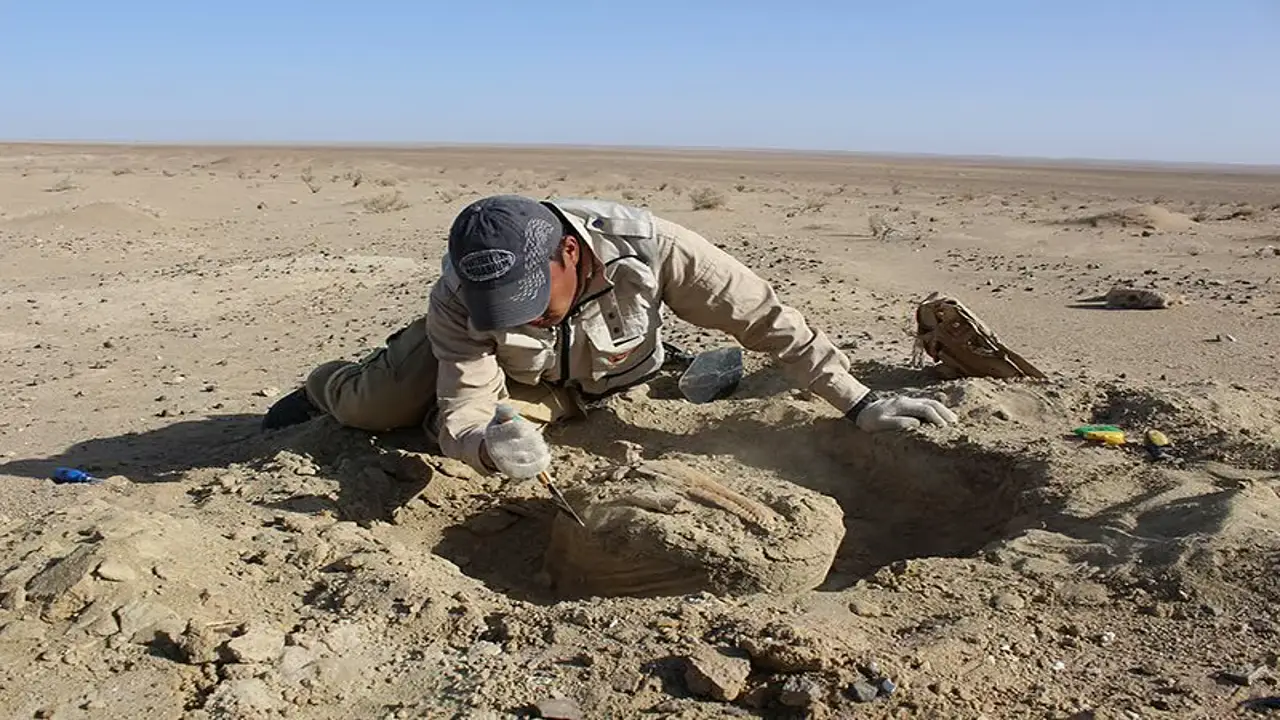
The first Velociraptor fossils were discovered in 1923 during the American Museum of Natural History’s Central Asiatic Expeditions, led by Roy Chapman Andrews. The specimen was found in the Gobi Desert and consisted of a skull and a claw. The species was named Velociraptor mongoliensis in 1924 by Henry Fairfield Osborn.
In 1971, the famous “Fighting Dinosaurs” specimen was unearthed – a Velociraptor and Protoceratops locked in combat, buried by a sand dune in the midst of their struggle. This fossil is one of the most dramatic pieces of evidence for dinosaur behavior ever discovered. It is now housed at the Mongolian Museum of Natural History.
11. Velociraptor Gallery
Explore the true Velociraptor
← Swipe or scroll to see more images →
🎧 Listen: What sound did Velociraptor make?
Scientists use relatives like birds and crocodiles to imagine Velociraptor’s vocalizations. It may have produced low growls, hisses, or bird‑like chirps and calls. Some evidence suggests dromaeosaurids could have communicated with closed‑mouth sounds, like modern cassowaries.
Final Thoughts
The real Velociraptor was no monster; it was a fascinating, bird‑like dinosaur that filled an important niche as a swift, feathered predator. Its discovery has reshaped our understanding of dinosaur biology, revealing that many theropods were covered in feathers and were far more bird‑like than previously imagined. As we continue to uncover new fossils, the story of Velociraptor – and the world it lived in – only becomes richer.
You might also like
Bibliography and Trusted Sources
- Osborn, H. F. (1924). “Three new Theropoda, Protoceratops zone, central Mongolia.” American Museum Novitates. View source
- Barsbold, R. (1983). “Carnivorous dinosaurs from the Cretaceous of Mongolia.” Transactions of the Joint Soviet‑Mongolian Paleontological Expedition. (No direct online link; cited in many sources.)
- Turner, A. H., Makovicky, P. J., & Norell, M. A. (2007). “Feather quill knobs in the dinosaur Velociraptor.” Science. View article
- Hone, D. W. E., & Rauhut, O. W. M. (2009). “Feeding behaviour of theropod dinosaurs.” Journal of Zoology. View abstract
- American Museum of Natural History. “Velociraptor.” View source
- National Geographic. “Velociraptor.” View source
- Mongolian Academy of Sciences. “The Fighting Dinosaurs.” View source
- Australian geographic. “Paleontologists excavating in the Gobi Desert (Image)” View source